

Our TKI

EYP-1901™VorolanibDurasert E™

EYP-1901: combining vorolanib and Durasert E™

EYP-1901 combines vorolanib with the Durasert E technology to deliver a continuous daily dose for at least 6 months. It is currently being investigated in pivotal phase 3 trials for the treatment of wet AMD and DME.
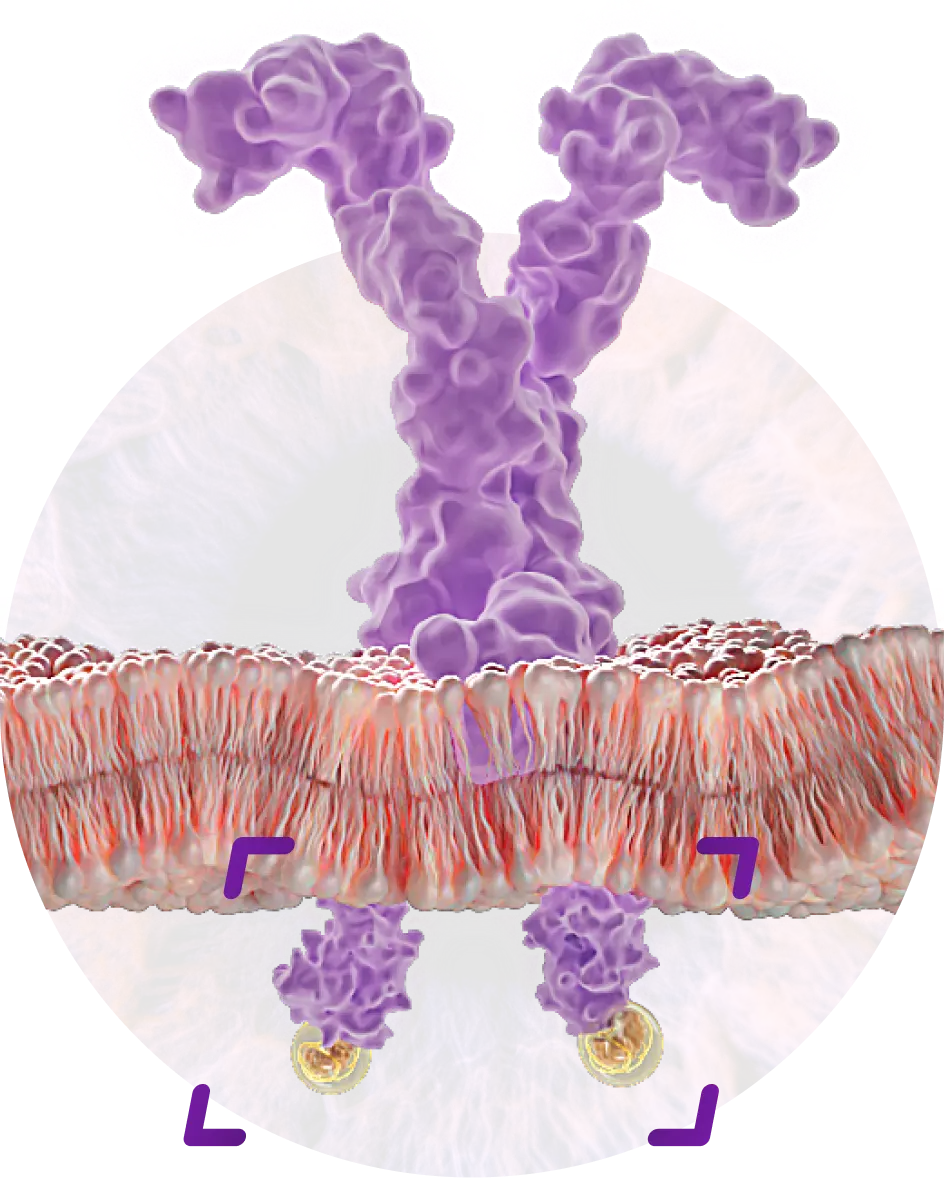
To date, EYP-1901 has been studied in >190 patients across four phase 1 and 2 clinical trials, with a favorable safety profile. A recent independent review of the phase 3 LUGANO/LUCIA masked safety data showed that the observed safety profile is consistent with previous EYP-1901 clinical trials.

EYP-1901 Summary

Blocks signaling from all VEGF isoforms and PDGF at the receptor level and uniquely inhibits IL-6 pro-inflammatory signaling

Therapeutic levels of vorolanib reached within hours*

Consistent daily dosing for ≥6 months

No free-floating drug particles

Preloaded sterile IVT syringe injector; to be shipped and stored at an ambient temperature

*Data from preclinical studies. Following a single EYP-1901 900-µg dose in Dutch-Belted rabbits, vorolanib reached concentrations exceeding IC50 in the choroid and retina within hours of administration.

Novel multi-moa blocking signaling from VEGF isoforms at the receptor level

Vorolanib intracellularly binding to VEGFR

*Data from preclinical studies. Following a single EYP-1901 900-µg dose in Dutch-Belted rabbits, vorolanib reached concentrations exceeding IC50 in the choroid and retina within hours of administration.

Our tyrosine kinase inhibitor (TKI): Vorolanib

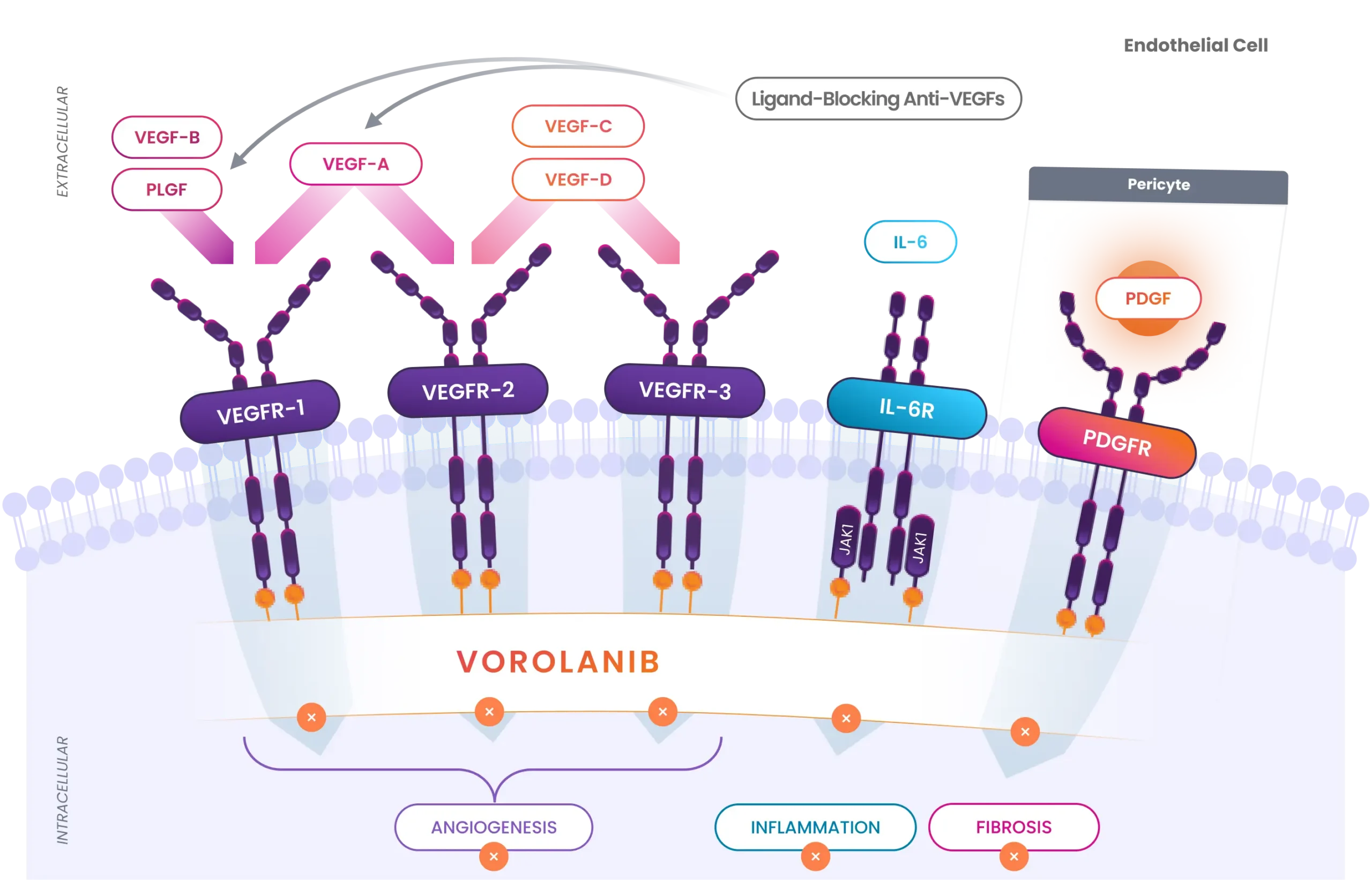
Vorolanib, a small molecule TKI, works intracellularly, binding to key receptors involved in wet AMD and DME pathogenesis, while anti-VEGFs act extracellularly binding to select VEGF ligands.

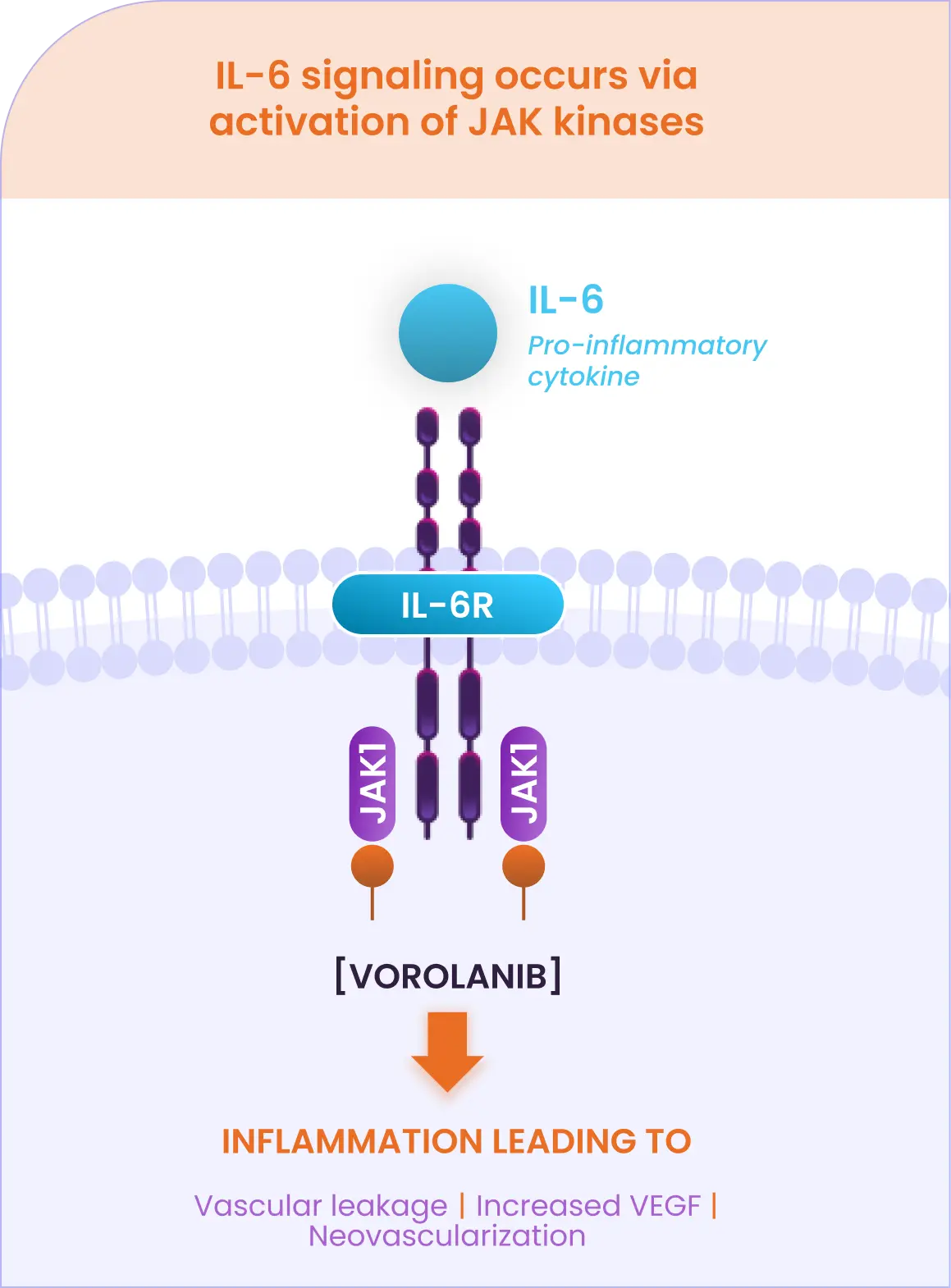
Vorolanib is a TKI that uniquely binds to VEGFR-1/2/3, PDGFR, and JAK-1, to inhibit angiogenic and IL-6 pro-inflammatory signaling.

Vorolanib has a multi-mechanism of action (MOA) for VEGF- and IL-6-mediated retinal diseases

Diagram illustrating vorolanib’s multi-mechanism of action, showing inhibition of VEGFR-1, VEGFR-2, VEGFR-3, PDGFR, and IL-6 signaling pathways involved in angiogenesis, inflammation, and cell proliferation in retinal disease.

PDGF contributes to pathological fibrosis and pericyte recruitment, potentially leading to treatment resistance.

Vorolanib acts within endothelial cells to inhibit the downstream activation of VEGFR-1/2/3, PDGFR, and IL-6 pro-inflammatory signaling.

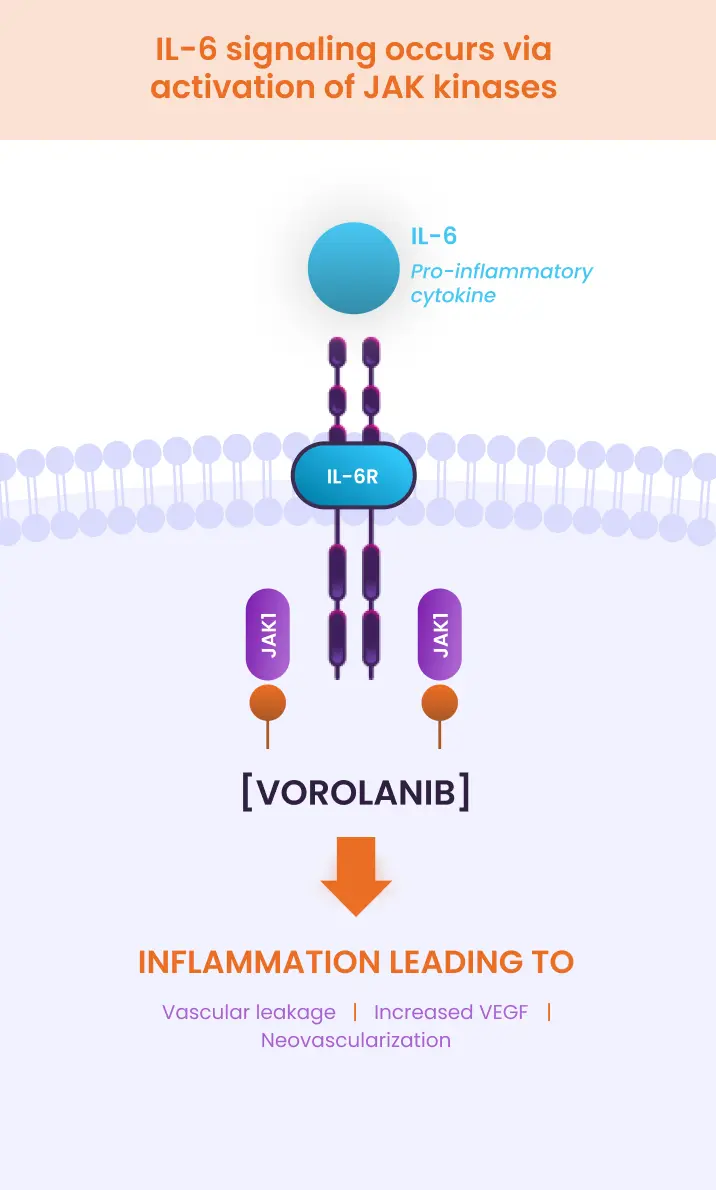
Vorolanib uniquely targets JAK-1, directly suppressing IL-6 pro-inflammatory signaling.Vorolanib uniquely targets JAK-1, directly suppressing IL-6 pro-inflammatory signaling.

IL-6 plays a critical role alongside VEGF-driven signaling to promote vascular permeability in wet AMD and DME.1,2

Vorolanib has been shown to:

  • Inhibit key VEGFRs
  • Inhibit IL-6 pro-inflammatory activity
  • Potentially offer more comprehensive disease control

Comparison of Vorolanib and Anti-VEGFs: Exploring a Potentially New Treatment Paradigm for Wet AMD and DME

Vorolanib
Anti-VEGF Agents
Site of Action
Intracellular
Extracellular
MOA
A small molecule that binds to receptor tyrosine kinases
Biologics bind to VEGF ligands, thereby preventing the receptor from being activated
Target Profile
  • VEGFR-1/2/3
  • PDGFR
  • JAK-1 (IL-6 pathway)
Primarily targeting VEGF-A
Delivery and Durability
Sustained release: a continuous daily dose for at least 6 months
Rapid vitreous clearance limits durability and requires frequent injections, 4-16 weeks
Vorolanib

Site of Action

Intracellular

MOA

A small molecule that binds to receptor tyrosine kinases

Target Profile

  • VEGFR-1/2/3
  • PDGFR
  • JAK-1 (IL-6 pathway)

Delivery and Durability

Sustained release: a continuous daily dose for at least 6 months

Anti-VEGF Agents

Site of Action

Extracellular

MOA

Biologics bind to VEGF ligands, thereby preventing the receptor from being activated

Target Profile

Primarily targeting VEGF-A

Delivery and Durability

Rapid vitreous clearance limits durability and requires frequent injections, 4-16 weeks

Anti-VEGFs with additional targets: aflibercept binds placental growth factor (PlGF); faricimab-svoa binds angiopoietin-2 (Ang2).

Durasert E™: a next-generation sustained delivery technology

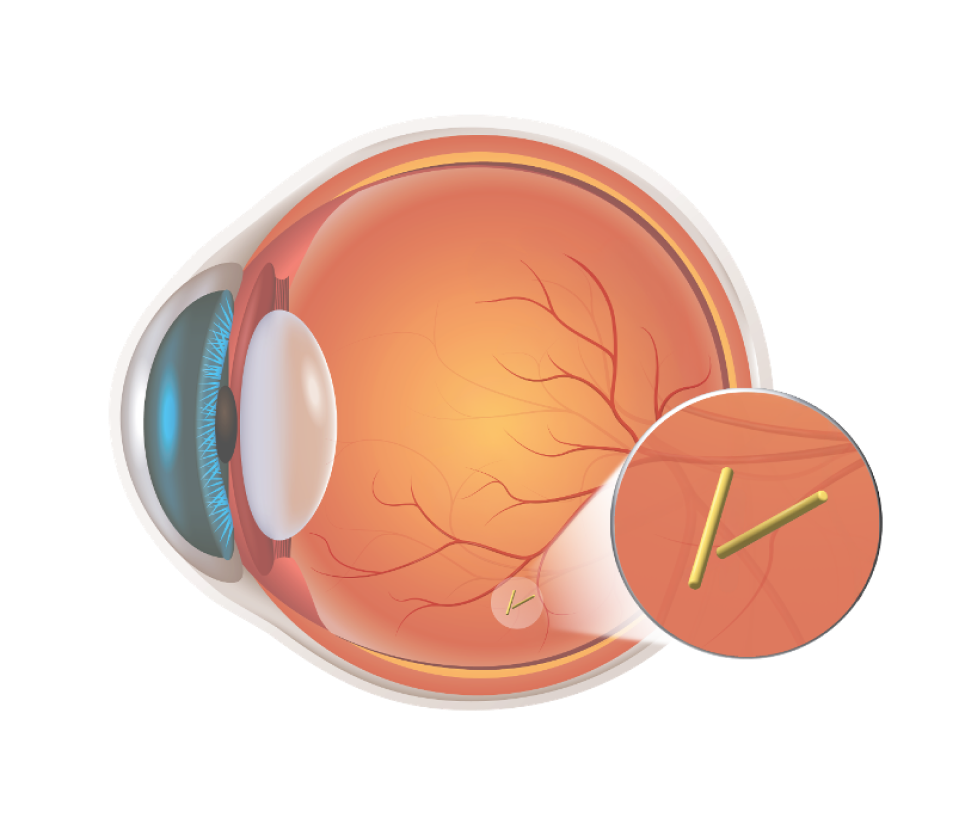
Durasert E™ is an investigational next-generation bioerodible intravitreal insert that delivers a continuous daily dose of vorolanib over the course of 6 months.

Durasert® technology, the predecessor to Durasert E, has been proven safe following use in thousands of eyes across 4 FDA-approved products: Vitrasert®, Retisert®, ILUVIEN®, and YUTIQ®.

Next-generation bioerodible intravitreal insert

For illustrative purposes only. Insert not to scale.

Each insert is:

  • 94% drug/6% matrix
  • ~1/5000th of the vitreous volume
  • No PEG/PLGA

EYP-1901 Delivers Continuous VEGF Receptor Inhibition — A Time-Lapse Perspective

Timeline illustrating the continuous delivery of DURAVYU VEGF receptor inhibition, with vorolanib being released after injection and maintained at therapeutic levels for at least six months before the biodegradable matrix resorbs.

MONTHS123456
Drug is measured in target tissue within hours
A therapeutic dose is consistently released for at least six months
The remaining matrix will bioerode over the following months
POST INJECTION

For illustrative purposes only.

EYP-1901 combines vorolanib with next-generation Durasert E technology to deliver a continuous daily dose for at least 6 months.

AMD, age-related macular degeneration; DME, diabetic macular edema; FDA, US Food & Drug Administration; IC, inhibitory concentration; IVT, intravitreal; MOA, mechanism of action; PDGFR, platelet-derived growth factor receptor; PEG, polyethylene glycol; PLGA, poly lactic-co-glycolic acid; TKI, tyrosine kinase inhibitor; VEGF, vascular endothelial growth factor.

EYP-1901 is an investigational medicinal product and is not authorized for sale in any country at the time of this publication. FDA approval in the US, Marketing Authorization in any other country, and the timeline for potential approval or authorization is uncertain. DURAVYU has been conditionally accepted by the US FDA as the proprietary name for EYP-1901 (vorolanib intravitreal insert).

References:

  1. Funatsu H, Yamashita H, Ikeda T, et al. Vitreous levels of interleukin-6 and vascular endothelial growth factor are related to diabetic macular edema. Ophthalmology. 2003;110(9):1690-1696. doi:10.1016/S0161-6420(03)00568-2
  2. Manda A, Lee LH, Steinkerchner M, et al. Analysis of aqueous interleukin-6 in diabetic retinopathy: a prospective, controlled trial of 328 eyes. Ophthalmology Retina. 2026; 10(1):81-87. doi:10.1016/j.oret.2025.06.014
Request more Info