


The real-world effectiveness of currently approved therapies can be limited by:
- High treatment burden and poor patient compliance due to injection fatigue
- The need for frequent and consistent anti-VEGF injections
- The complexity of wet AMD and DME as multi-factorial diseases
Sustained-release delivery of small molecule TKIs is designed to provide durable, continuous control of disease activity to potentially maintain vision over the long-term.
Many Patients Still Lose Vision Despite Available Therapies
BCVA change over time
IRIS registry 6-year follow-up1,2
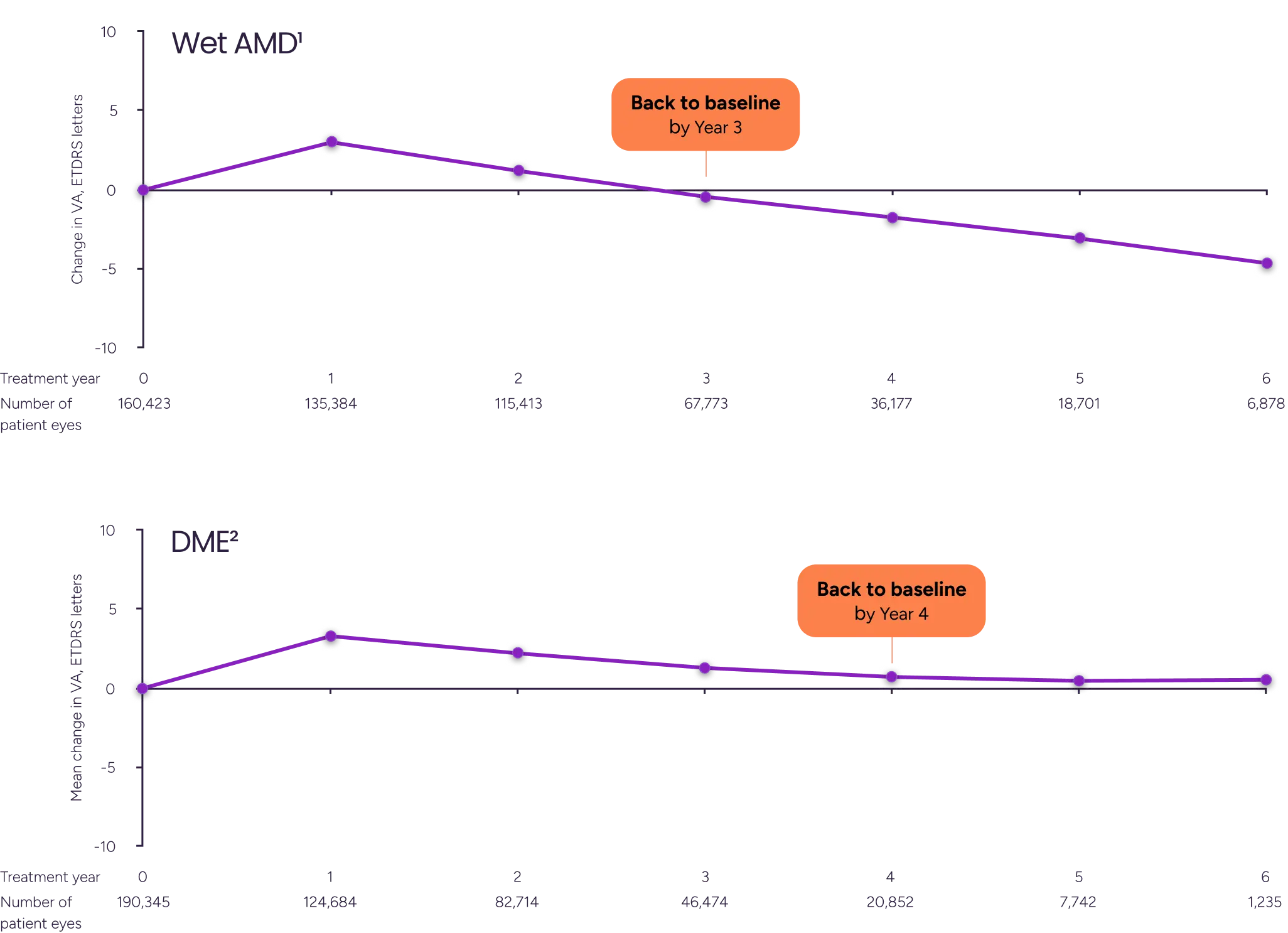
AMD, age-related macular degeneration; BCVA, best corrected visual acuity; DME, diabetic macular edema; ETDRS, Early Treatment Diabetic Retinopathy Study; TKI, tyrosine kinase inhibitor; VA, visual acuity; VEGF, vascular endothelial growth factor.
EYP-1901 is an investigational product and the safety and efficacy of EYP-1901 has not been established. FDA has not approved EYP-1901 in the United States. The materials discussed on this site do not predict future FDA approval. Conclusive evidence of efficacy and safety of EYP-1901 will require further investigation in well-controlled Phase 3 clinical trials.
References:
- Wykoff CC, Garmo V, Tabano D, et al. Impact of anti-VEGF treatment and patient characteristics on vision outcomes in neovascular age-related macular degeneration: up to 6-year analysis of the AAO IRIS® Registry. Ophthalmol Sci. 2024;4:100421. doi:10.1016/j.xops.2023.100421
- Kuo BL, Tabano D, Garmo V, et al. Long-term treatment patterns for diabetic macular edema: up to 6-year follow-up in the IRIS® Registry. Ophthalmol Retina. 2024;8(11):1074-1082. doi:10.1016/j.oret.2024.05.017