

Educational Resources
VIDEO SERIES:
An overview of TKIs and how they may fit into the wet AMD treatment regimen
Presented by:
 Sophie Bakri, MD
 Durga Borkar, MD, MMCi
 Jay Sridhar, MD
 Ehsan Rahimy, MD
 Lejla Vajzovic, MD
VIDEO SERIES:
Presented by:
Sophie Bakri, MD
Durga Borkar, MD, MMCi
Jay Sridhar, MD
Ehsan Rahimy, MD
Lejla Vajzovic, MD

Why might a multi-MOA approach to wet AMD be effective?
A Review of DAVIO 2 safety results and supplement-free data

What therapies are in development that can potentially extend treatment intervals and maintain VA and anatomic control?
What evidence makes EYP-1901 a potential treatment for wet AMD and DME?

How can a multi-MOA approach benefit the management of wet AMD?
Based on the data today, which patients do you feel are appropriate for EYP-1901 and the multi-mechanism of action approach?
What is EYP-1901?
What are Tyrosine-Kinase Inhibitors (TKIs) and how do they work?

Why do real-world wet AMD outcomes differ from those seen in clinical trials?
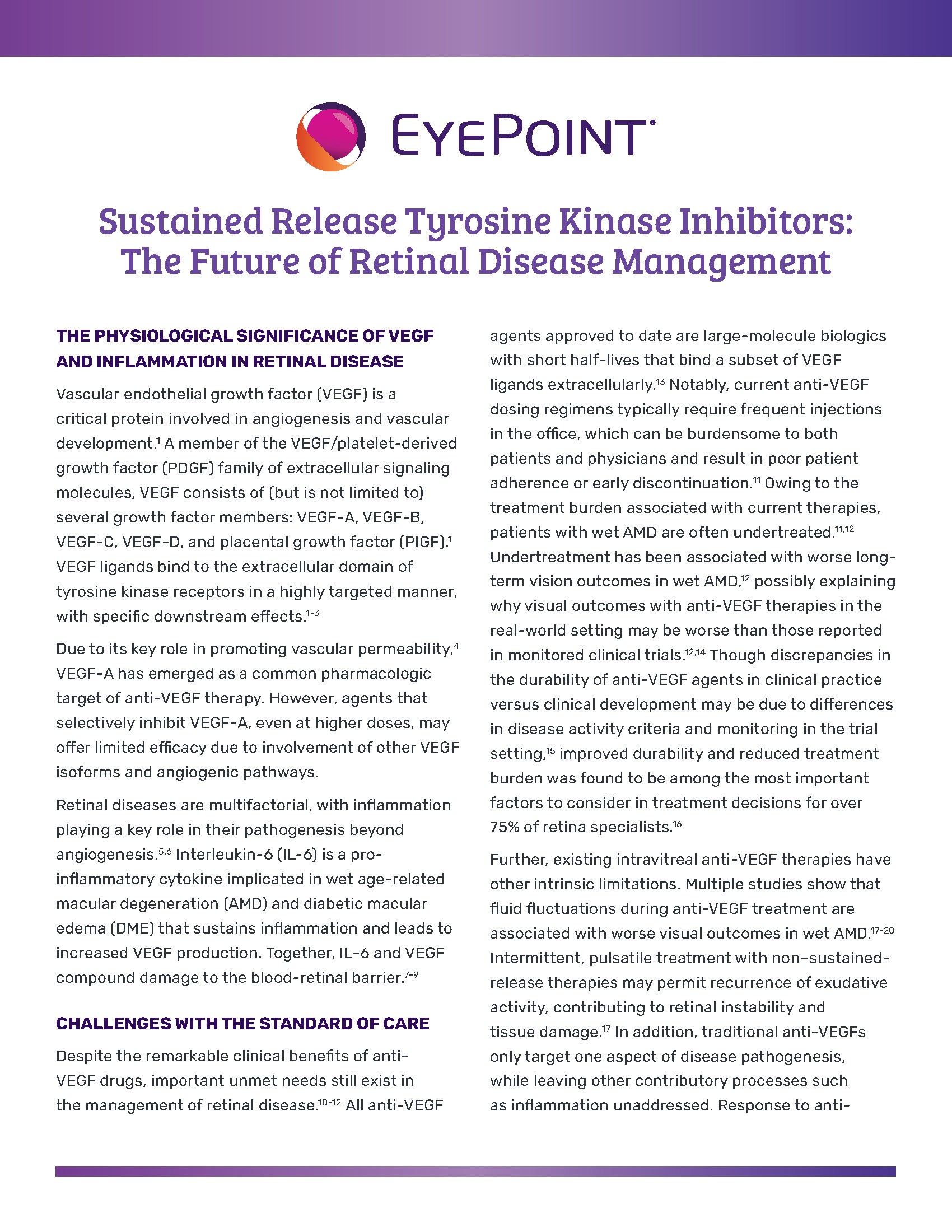
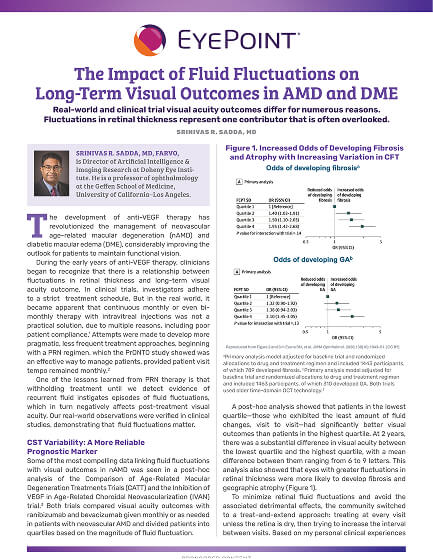
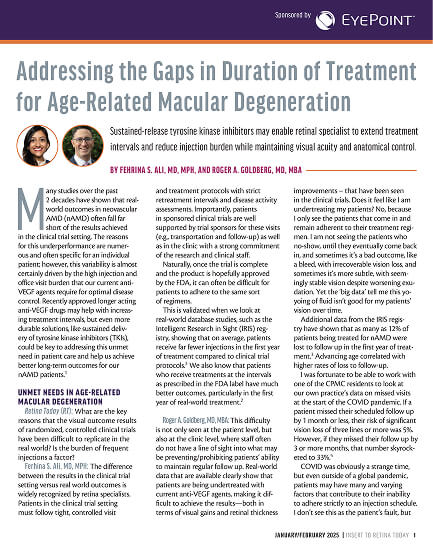
White Papers:
AMD, age-related macular degeneration; DME, diabetic macular edema; FDA, US Food & Drug Administration; MOA, mechanism of action; SRF, subretinal fluid; TKI, tyrosine kinase inhibitor; VA, visual acuity.
EYP-1901 is an investigational product and the safety and efficacy of EYP-1901 has not been established. FDA has not approved EYP-1901 in the United States. The materials discussed on this site do not predict future FDA approval. Conclusive evidence of efficacy and safety of EYP-1901 will require further investigation in well-controlled Phase 3 clinical trials.